

Introduction
Recruiting is no longer about reacting to immediate vacancies. In 2025, it’s about anticipating workforce needs before they arise. Enter Talent Analytics and Predictive HR—two powerful tools that are reshaping how organizations hire, manage, and retain talent.
For employers in Business & Administration, this transformation means moving from guesswork to data-driven clarity. For employees, it means a hiring process that is faster, fairer, and more transparent.
At American Recruiters—one of the nation’s leading recruiting and staffing firms in the Business & Administration industry—we see predictive HR not as a futuristic concept, but as a practical strategy already delivering results. This article explores what Talent Analytics is, why it matters, and how employers and professionals can leverage it to thrive in today’s competitive market.
 1. What Is Talent Analytics?
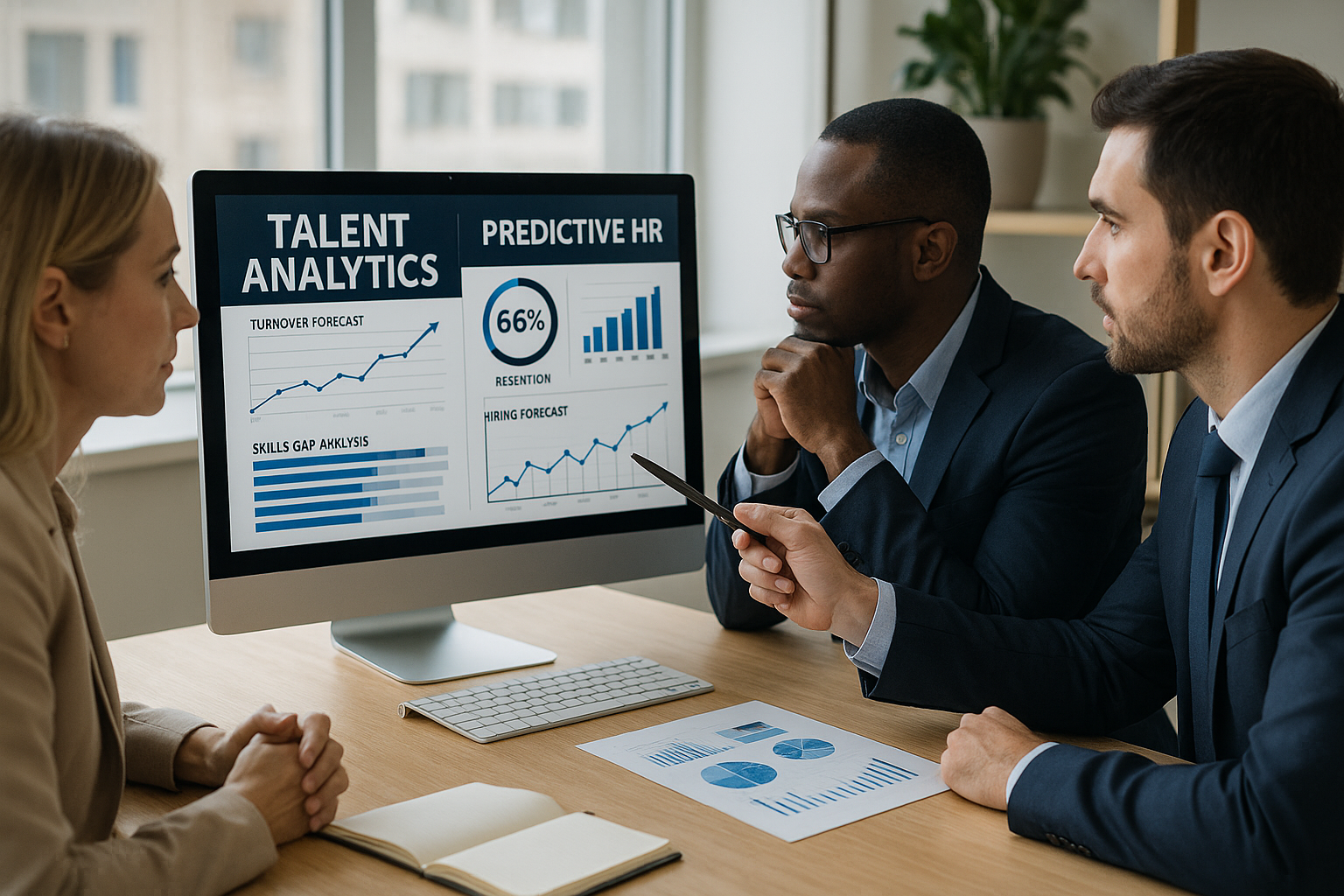
Talent Analytics is the systematic analysis of workforce data to inform decision-making. It goes beyond traditional HR reporting to predict future needs and outcomes.
-
Descriptive Analytics: What happened? (e.g., turnover rates, hiring timelines).
-
Diagnostic Analytics: Why did it happen? (e.g., low engagement scores).
-
Predictive Analytics: What’s likely to happen? (e.g., expected turnover in six months).
-
Prescriptive Analytics: What should we do about it? (e.g., implement retention incentives).
In Business & Administration, these insights help leaders align workforce planning with organizational strategy.
2. Why Predictive HR Is a Game-Changer
Predictive HR turns data into foresight. Instead of scrambling when vacancies arise, companies can plan proactively.
-
Forecasting Turnover: Predict which roles are at highest risk of attrition.
-
Succession Planning: Identify internal employees who can step into leadership positions.
-
Skill Gap Analysis: Detect emerging skill shortages and design upskilling programs.
-
Workforce Optimization: Align staffing levels with business cycles, preventing both shortages and overstaffing.
For Business & Administration professionals, this translates to less disruption, smoother operations, and stronger organizational resilience.
3. AI and Analytics Working Together
AI is accelerating Talent Analytics by processing vast amounts of data and spotting patterns humans might miss. For example:
-
Recruitment: AI can predict which candidates are most likely to succeed in a role.
-
Compensation: Benchmarking tools identify fair pay ranges, improving retention.
-
Engagement: Sentiment analysis uncovers morale risks before they escalate.
At American Recruiters, we blend AI-powered insights with human judgment. While data guides decisions, it’s our recruiters who interpret the nuance and align recommendations with company culture.
4. Benefits for Employers
Adopting Talent Analytics provides measurable advantages:
-
Better Hiring Decisions – Reduced bias, stronger cultural alignment.
-
Reduced Turnover – Identifying risks early prevents costly churn.
-
Enhanced DEI Efforts – Data reveals where inclusivity gaps exist and how to address them.
-
Cost Efficiency – Smarter workforce planning reduces wasted spend on reactive hiring.
-
Stronger Employer Branding – Candidates perceive data-driven organizations as forward-thinking and fair.
For Business & Administration employers, the ROI of predictive HR can be transformative.
5. Benefits for Employees
Predictive HR isn’t just good for companies—it’s good for employees too:
-
Fairer Hiring: Analytics reduce bias and increase transparency.
-
Faster Processes: Automation speeds up screening and communication.
-
Clearer Career Paths: Employees gain visibility into succession planning and development opportunities.
-
Improved Engagement: Feedback loops give workers a voice in shaping policies.
The result: more engaged, motivated, and loyal employees.
6. What Employers Should Do
To successfully implement Talent Analytics, employers must take strategic steps:
-
Invest in the Right Tools: Platforms that integrate with HR systems and provide actionable insights.
-
Train HR and Admin Teams: Analytics is only useful if managers know how to interpret and act on the data.
-
Prioritize Data Ethics: Use employee data responsibly, with transparency and compliance.
-
Blend Human + Machine: Recruiters and leaders must interpret insights within cultural and organizational contexts.
Partnering with recruiting experts like American Recruiters ensures the data is applied strategically—not blindly.
7. What Employees Should Do
Employees can also benefit by positioning themselves within data-driven environments:
-
Highlight Metrics in Resumes: Show quantifiable achievements (e.g., “Reduced processing time by 30%”).
-
Embrace Analytics Tools: Be open to platforms that assess skills, engagement, and performance.
-
Develop Data Literacy: Understanding dashboards and metrics is increasingly valuable.
-
Use Feedback Loops: Take advantage of surveys and analytics platforms to shape workplace improvements.
Those who can blend human intuition with data literacy are highly valued in 2025.
8. Case Study: Predictive HR in Action
A mid-sized business services firm struggled with high turnover in its administrative support teams. Using predictive analytics, they identified:
-
A 25% higher risk of attrition among employees with fewer training opportunities.
-
Seasonal spikes in workload that created burnout.
-
Engagement dips among hybrid workers without regular manager check-ins.
By acting on this data, the company introduced targeted training, adjusted workload distribution, and increased touchpoints for hybrid employees. Within a year, turnover decreased by 18% and productivity rose.
This is predictive HR in practice—and it’s a model more companies will adopt in 2025.
9. The Future of Talent Analytics
By 2030, Talent Analytics will be fully embedded in organizational strategy. Companies that don’t adopt it will risk being left behind. The key will be balance: leveraging powerful analytics while retaining the human empathy and judgment that define strong leadership.
At American Recruiters, we believe Talent Analytics is not about replacing recruiters, but empowering them. Data provides clarity, but people provide context—and together, they build the future of Business & Administration staffing.
Conclusion
Talent Analytics and Predictive HR are reshaping recruitment, turning reactive processes into proactive strategies. Employers gain foresight, efficiency, and stronger teams. Employees gain fairness, transparency, and opportunity.
The organizations that succeed in 2025 will be those that embrace data while honoring humanity. And with American Recruiters as a trusted partner, businesses nationwide are already putting this future into action.
References: Arxiv (AI and automation in recruitment studies), The Guardian (AI tools helping startups predict and plan recruitment), American Staffing Association (2025 Staffing Trends Webinar), Wired (The AI-fueled future of work needs humans more than ever)
Leave a Reply
You must be logged in to post a comment.